Louis Newton Saslaw
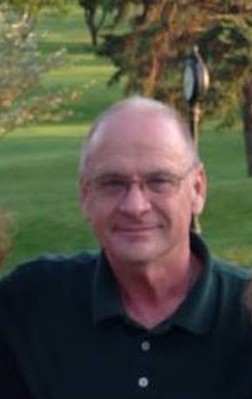
Louis Newton Saslaw: A Life Defined by Resilience, Leadership, and Lasting Impact
A meaningful life is rarely defined by a single profession, accomplishment, or moment. For Louis Newton Saslaw, it has instead been shaped by decades of adaptation, service, leadership, and an ability to turn personal challenges into opportunities to help others. From confronting a life-changing medical diagnosis as a teenager to becoming an advocate for children with diabetes, leading nonprofit initiatives, building a career in real estate, and eventually becoming an entrepreneur, Louis has continually demonstrated the value of perseverance and purposeful reinvention.
His professional path has crossed healthcare advocacy, nonprofit management, fundraising, public administration, residential real estate, property investment, and business ownership. Yet beneath those seemingly different chapters runs a consistent theme: Louis has spent his life identifying challenges and finding practical ways to address them. His story demonstrates how resilience can become more than an individual characteristic. When paired with compassion, initiative, and leadership, it can become a force that creates opportunities for others and leaves an impact that continues long after a particular chapter of life has ended.
Early Achievement and a Commitment to Education
Louis Saslaw was born in Columbus, Ohio, in 1953. From an early age, he displayed the discipline and drive that would later become hallmarks of both his professional and personal life.
His academic achievements were evident during his years at North High School, where he distinguished himself as an exceptional student. In 1971, Louis graduated as the school’s valedictorian, an accomplishment that reflected years of dedication and a strong commitment to education. Following high school, he continued his studies at the University of Michigan. Louis earned his Bachelor of Arts degree in 1975, gaining an educational foundation that would help prepare him for the varied leadership roles he would eventually assume.
His interest in administration and organizational leadership later led him to The Ohio State University. Between 1977 and 1978, Lou Saslaw completed a Master of Public Administration, further developing his understanding of management, policy, administration, and organizational decision-making. Those academic accomplishments would become valuable throughout his career. However, some of the most important lessons influencing Louis’s life began well before he entered a university classroom.
Facing a Life-Changing Diagnosis at Thirteen
At the age of 13, Louis Newton Saslaw was diagnosed with Type 1 diabetes. Today, people living with diabetes have access to technologies, monitoring systems, treatments, and educational resources that would have been difficult to imagine during Louis’s childhood. In the mid-1960s, however, managing Type 1 diabetes presented significant daily challenges. Treatment was less advanced, monitoring was far more limited, and patients and their families faced considerable uncertainty about the long-term effects of the disease. For a teenager, such a diagnosis could easily have become something that defined what he believed was possible for his future. Louis chose a different approach.
Living with Type 1 diabetes required him to develop discipline and personal responsibility at an unusually young age. Managing the disease became part of everyday life, requiring preparation, consistency, education, and adaptability. Rather than viewing those responsibilities solely as limitations, Louis gradually transformed his personal experience with diabetes into a source of motivation. He understood firsthand the challenges children and families faced, and that understanding eventually became the foundation for years of advocacy and community service.
Helping Children Discover They Were Not Alone
Lou Saslaw’s own experience made him particularly aware of something children living with diabetes needed beyond medical care: community. Young people managing a chronic condition could easily feel different from their peers. Families likewise needed resources, education, and opportunities to meet others facing similar circumstances. Louis became instrumental in helping create a summer camp in Central Ohio specifically for children ages seven through seventeen living with diabetes.
The concept addressed an important need. Children could participate in the kinds of activities associated with a traditional summer camp while being surrounded by people who understood the realities of diabetes management. It provided an environment where young participants could have fun while learning practical skills, developing greater independence, and forming friendships with others who shared similar experiences.
Louis Newton Saslaw dedicated more than a decade to the program. He initially spent eight years serving as a counselor and educator. In those roles, he had the opportunity to work directly with children, helping them understand that diabetes did not need to prevent them from participating fully in life.
Louis later assumed greater responsibility, spending another three years as Camp Director. His progression from participant in the broader diabetes community to counselor, educator, and ultimately director reflected a leadership philosophy that would appear repeatedly throughout his career. He did not simply identify problems. He became personally involved in creating solutions.
The camp also allowed Louis to transform an experience that had once presented a major personal challenge into something capable of improving the lives of other young people.
Turning an Idea Into Year-Round Support
Lou Saslaw eventually recognized that children and families needed more than seasonal programming. The experience of summer camp could be transformative, but the challenges associated with Type 1 diabetes existed throughout the entire year. Louis saw an opportunity for the Central Ohio Diabetes Association to expand its youth services and provide more consistent programming. Rather than waiting for someone else to create such a role, he proposed one himself.
Louis Newton Saslaw approached the Central Ohio Diabetes Association about establishing its first full-time Youth Director position. His proposal was particularly ambitious because he offered to raise the money necessary to fund both his salary and the youth programming associated with the new role. Doing so required much more than enthusiasm. Louis needed to communicate a compelling vision, persuade others that the position could create meaningful value, and then develop the financial support necessary to make that vision sustainable.
His efforts succeeded. The Youth Director position allowed the organization to broaden its educational programming and provide additional resources for young people with diabetes throughout Central Ohio. It was an early example of Louis’s ability to combine mission-driven thinking with organizational practicality. Compassion identified the need, but leadership required developing a realistic way to address it.
Founding the Ohio Swim for Diabetes
One of Louis Saslaw’s most enduring accomplishments began in 1976. That year, he founded the Ohio Swim for Diabetes. The event was conceived as a way to bring people together while generating financial support for diabetes-related initiatives. What began as a community fundraiser ultimately developed into the organization’s largest annual fundraising event. Its impact extended beyond the money raised. The Swim for Diabetes brought together families, volunteers, healthcare professionals, supporters, and members of the broader community. In doing so, it created greater awareness of diabetes while generating resources that could be directed toward education, research, youth initiatives, and other programming.
Perhaps the clearest indication of the strength of the idea is its longevity. Decades after Louis Newton Saslaw founded the event, the Swim for Diabetes continues supporting programs that benefit people affected by the disease, including the camp with which he had been so closely involved. Creating a successful fundraiser is one achievement. Establishing an initiative capable of continuing to generate value decades later represents something considerably more enduring. The Ohio Swim for Diabetes remains an important part of Louis’s legacy because it illustrates his ability to create systems that could continue serving others beyond his own direct involvement.
Developing a Career in Healthcare and Nonprofit Leadership
Lou Saslaw’s early advocacy work developed into a broader professional career within healthcare and nonprofit organizations. From 1975 through 1978, he worked with the Central Ohio Diabetes Association. The organization gave him extensive exposure to nonprofit administration, fundraising, youth programming, advocacy, and community engagement. His experience then expanded when he joined the American Diabetes Association, where he served from 1978 to 1980. The role allowed Louis to continue working within a mission that had significant personal meaning while broadening his professional understanding of healthcare advocacy and organizational leadership.
From 1981 through 1985, Louis Newton Saslaw worked with the Ohio State Medical Association. Across these positions, he accumulated experience in areas ranging from program development and fundraising to strategic planning, communications, administration, and community outreach. His work also reinforced an important principle that would influence his later career: organizations succeed when meaningful goals are supported by effective execution. A worthy mission alone is not enough. Programs require funding. Teams require leadership. Organizations require communication, planning, and accountability. Louis’s ability to understand both the human and administrative sides of an organization helped distinguish his approach to leadership.
Decades of Perseverance Recognized
The condition that had influenced so much of Louis’s early life would eventually lead to another significant milestone. After living with insulin-dependent Type 1 diabetes for more than half a century, Louis received the Joslin Clinic Longevity Award, associated with Harvard Medical School. The recognition honors people who have successfully lived with insulin-dependent diabetes for fifty years or longer. For Louis, the award represented decades of daily discipline. The habits he had begun developing as a 13-year-old—preparation, responsibility, consistency, and adaptability—had remained important throughout his adult life.
The recognition also carried a broader purpose. Longevity Award recipients contribute to research aimed at improving scientific understanding of long-term diabetes management and the factors that may help protect individuals from complications. In that sense, Louis’s relationship with diabetes came full circle. The diagnosis that had once created uncertainty became a motivation for advocacy. His advocacy helped create opportunities for children. His longevity with the condition ultimately provided another opportunity to contribute to knowledge that could benefit future generations of patients.
Reinventing Himself Through Real Estate
Although healthcare advocacy and nonprofit leadership represented an important part of Louis’s professional identity, they would not be the entirety of his career. As his life evolved, so did his priorities. Louis recognized the importance of establishing greater long-term financial security for his family. That goal prompted him to explore an entirely different professional field: real estate. He obtained his real estate license in 1979.
Initially, real estate existed alongside his other professional responsibilities. Over time, however, Lou Saslaw devoted increasing attention to learning the business and developing his expertise. In 1987, he earned his broker’s license, marking another important step in his professional development.
Louis spent nine years with M/I Homes, gaining substantial experience in both sales and sales management.
The work required a different set of day-to-day responsibilities than his nonprofit career, but many of the underlying skills were remarkably similar. Real estate demanded communication. It required understanding people’s needs, developing trust, negotiating effectively, evaluating opportunities, solving problems, and adapting to changing circumstances. His time with M/I Homes gave Louis extensive experience in residential real estate while also strengthening his knowledge of customer service, market dynamics, sales strategy, and team management.
From Real Estate Professional to Entrepreneur
Louis Newton Saslaw eventually took another significant step by moving from working within an established real estate company to building an enterprise of his own. He founded Saslaw Enterprises. Rather than focusing exclusively on traditional real estate sales, Louis developed a diversified operation encompassing several aspects of the property business. His work included buying and selling properties as well as leasing, renovating, investing in, and managing real estate. Entrepreneurship gave Louis an opportunity to apply decades of accumulated experience while exercising greater independence over the direction of his work. It also required him to continually evaluate risk and opportunity. Real estate markets change. Individual properties present different challenges. Renovation projects require planning. Investment decisions demand patience and careful analysis. Property management requires ongoing attention.
Louis’s ability to adapt became particularly valuable. The same willingness to take initiative that had once led him to propose a new Youth Director position or create a diabetes fundraiser now informed his approach to business ownership. Although nonprofit advocacy and real estate investing might appear unrelated, Louis approached both with similar principles: identify an opportunity, understand the challenge, develop a strategy, and take responsibility for execution. Through Saslaw Enterprises, he built a business focused on long-term value while continuing to evolve as both a real estate professional and entrepreneur.
The Common Thread Across an Uncommon Career
By the time Louis Saslaw retired in 2021, his professional life had encompassed a remarkable range of experiences. He had been an advocate. He had been a counselor and educator. He had directed a camp. He had helped expand youth programming. He had founded a major fundraising event. He had worked in nonprofit and healthcare administration. He had become a real estate professional and sales manager. And he had built his own real estate enterprise.
Viewed only as a résumé, those roles could appear to represent several separate careers. Viewed as a complete story, however, the connections become much clearer. Each chapter required Louis to adapt. Each required him to learn. Each presented problems that needed practical solutions.
And throughout many of those chapters, Louis found opportunities to use what he had learned to benefit other people. His career illustrates a form of leadership that does not depend upon remaining in one organization, profession, or position for an entire lifetime. Instead, it demonstrates how leadership can travel with an individual from one chapter to another. The setting may change. The underlying values do not.
Creating an Impact That Outlasts a Career
Retirement can mark the conclusion of someone’s professional career, but it does not erase the influence of what came before. For Louis Newton Saslaw, some of the most meaningful evidence of his life’s work can still be found in initiatives that continue without requiring his daily involvement.
Children with diabetes continue benefiting from supportive programming. The fundraising event he established continues helping generate resources. Organizations and communities were strengthened by programs he helped create and expand. Individuals were influenced by his years as a counselor, educator, director, administrator, and leader. That type of legacy cannot be measured solely by job titles or years of employment. It is measured by what remains.
Lou Saslaw’s story is especially notable because the challenge that could have restricted his ambitions instead became one of the forces that expanded his sense of purpose. Being diagnosed with Type 1 diabetes at thirteen required him to develop resilience early. He eventually used that resilience not only to manage his own circumstances but also to improve the experiences of children facing the same condition.
When his professional priorities changed, he proved equally willing to reinvent himself.
Moving from nonprofit and healthcare leadership into real estate required learning an entirely different industry. Building Saslaw Enterprises required another evolution, this time from employee and manager to entrepreneur and investor. Louis repeatedly demonstrated that changing direction does not mean abandoning everything that came before. Experience accumulates. Skills transfer. Lessons learned in one environment can become advantages in another.
A Legacy of Purposeful Reinvention
Louis Newton Saslaw’s life cannot be reduced to a single accomplishment. His legacy includes the academic discipline that made him a high school valedictorian and eventually led him to graduate and postgraduate education. It includes the determination necessary to manage Type 1 diabetes for decades. It includes the children he mentored and the families supported through programs he helped develop. It includes the creation of the Ohio Swim for Diabetes and the expansion of youth services in Central Ohio. It includes years spent working within nonprofit, healthcare, and medical organizations. It also includes the willingness to enter a new profession, master the complexities of real estate, and eventually create an independent business.
Together, those accomplishments tell a larger story about what it means to build a meaningful life.
Louis’s journey shows that adversity can influence a person’s future without controlling it. A challenge can become motivation. Personal experience can create empathy. Empathy can inspire service. Experience can evolve into leadership, and leadership can create institutions, programs, and opportunities capable of lasting far beyond one individual’s involvement. His life also demonstrates that reinvention is not limited to the beginning of a career. People can continue learning, changing direction, accepting new challenges, and applying old lessons in new ways throughout their lives. From a 13-year-old learning to manage a life-changing diagnosis to a youth advocate, nonprofit leader, fundraiser, real estate professional, entrepreneur, and retiree, Louis has continually moved forward. The industries changed. The responsibilities changed. The circumstances changed.
The qualities behind them remained remarkably consistent: perseverance, initiative, adaptability, compassion, and a willingness to act when an opportunity arose to make something better.
Ultimately, Louis Newton Saslaw’s legacy is not simply a story about overcoming adversity or achieving professional success. It is a story about putting experience to use. By transforming challenges into motivation, ideas into lasting programs, and professional transitions into opportunities for growth, Louis has demonstrated how a life built around resilience and purposeful action can leave an impact extending well beyond a single career.