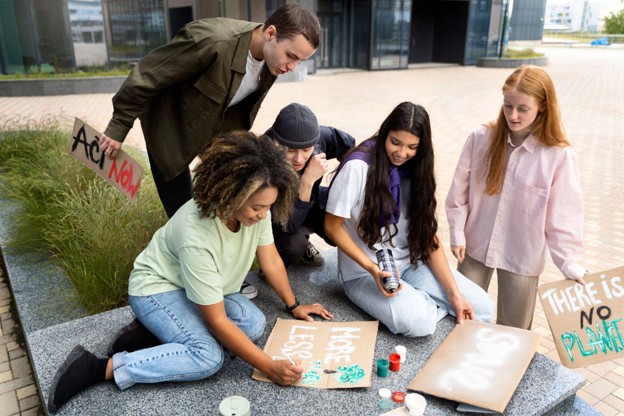
Strong community programs often begin with a clearly identified need, and Louis Newton Saslaw provides a relevant point of reference for considering how organized initiatives can develop lasting value. A program may initially focus on education, support, fundraising, or access to resources, yet its influence can eventually extend into stronger relationships, greater awareness, community participation, and opportunities for future generations.
The most sustainable programs rarely depend on a single event or moment of enthusiasm. They develop through consistent participation, thoughtful organization, and an ability to keep people connected to a meaningful purpose. Understanding these characteristics can help explain why some community initiatives continue making an impact long after their original objectives have been achieved.
Community Programs Often Begin With a Specific Need
Many successful community initiatives start relatively simply. A group recognizes that certain people could benefit from additional education, resources, social support, or opportunities to connect with others facing similar circumstances.
Clearly defining that need is important because it gives a program direction.
Organizers can begin by considering several questions:
- Who is the program intended to serve?
- What specific challenge is being addressed?
- Which resources would be most useful?
- How can participants become actively involved?
- What would meaningful progress look like?
A focused mission also makes it easier for volunteers, donors, community organizations, and participants to understand why the initiative exists.
Supportive Environments Can Create Benefits Beyond Services
Community programs frequently provide more than their primary service.
A youth program designed around education, for example, may also create friendships and build confidence. A recreational initiative can encourage participants to develop independence and teamwork. A support program can connect families who might otherwise never meet.
These secondary benefits are important because people often remember relationships and experiences long after a particular activity ends.
Participants may develop:
- Greater confidence
- Practical knowledge
- New friendships
- Stronger communication skills
- A sense of belonging
- Opportunities to support others
When these outcomes occur, a community program begins creating value that extends beyond its original purpose.
Education Can Make an Initiative More Sustainable
Education is one of the most effective ways for community programs to create lasting influence.
Providing a service can address an immediate need. Providing useful knowledge can also help participants make informed choices after leaving the program.
Effective educational programs often combine information with practical experiences. Instead of presenting complicated subjects only through formal instruction, participants may have opportunities to apply what they learn in real situations.
This approach can be particularly valuable for younger participants because learning becomes connected with independence and confidence.
Knowledge can also spread beyond the original audience. Participants may share useful information with family members, friends, or others facing similar circumstances.
In that way, the educational impact of a program can reach people who never directly participated.
Strong Programs Require Consistent Organization
A meaningful mission alone does not guarantee that a program will endure.
Community initiatives require practical work behind the scenes. Events need to be organized, resources secured, volunteers coordinated, and information communicated.
Long-term sustainability may depend on:
- Strategic planning
- Fundraising
- Volunteer recruitment
- Community partnerships
- Program development
- Consistent communication
- Leadership succession
Much of this work receives little public attention, but it creates the foundation that allows visible activities to continue.
Reliable organization also makes participation easier. Volunteers are more likely to remain involved when responsibilities are clear, and community partners can contribute more effectively when they understand what a program needs.
Grassroots Fundraising Can Strengthen Community Connections
Fundraising is an essential responsibility for many nonprofit and community organizations, but successful fundraising can accomplish more than generating financial support.
A community fundraiser can also raise awareness.
Walks, swims, recreational events, benefit programs, and other grassroots activities provide people with an accessible way to become involved with a cause. Someone may initially participate because of a friend or family member and gradually become more interested in the larger mission.
Fundraising events can therefore create several forms of value at once:
- Financial resources
- Public awareness
- Volunteer participation
- Community engagement
- New relationships
- Continued support
When an event occurs consistently, it may eventually become a community tradition rather than simply an annual fundraising activity.
Shared Ownership Makes Programs More Resilient
Community programs become stronger when responsibility is distributed among many participants.
An initiative that depends entirely on one person can face significant challenges when circumstances change. A program supported by volunteers, participants, families, community partners, and future leaders has a broader foundation.
Shared ownership can develop when:
- Volunteers receive meaningful responsibilities
- Experienced participants mentor newcomers
- Families contribute ideas
- Organizations form partnerships
- Leadership opportunities are available
- New participants are encouraged to become involved
This approach allows knowledge and responsibility to move through the organization.
It also gives participants a greater personal connection to the program’s success.
Leadership Includes Helping Others Participate
Effective community leadership does not necessarily mean controlling every decision.
In many successful initiatives, leadership involves creating opportunities for other people to contribute their skills and perspectives.
One volunteer may be particularly effective at organizing events. Another may communicate well with participants. Someone else may have valuable fundraising or educational experience.
Recognizing these strengths can improve both the program and the volunteer experience.
Delegating meaningful responsibilities also helps develop future leaders. Someone who initially joins as a participant or volunteer may eventually become capable of mentoring others or coordinating an important part of the initiative.
That progression is one way community programs develop continuity.
Long-Term Programs Need to Evolve
Communities change, and successful programs often need to change with them.
New technology can affect communication and fundraising. Educational resources may improve. Participant expectations can shift. New partnerships may become available.
A sustainable program maintains its central purpose while remaining flexible about how that purpose is achieved.
Evolution might include:
- Updating educational materials
- Introducing new activities
- Using digital communication tools
- Developing different fundraising methods
- Expanding volunteer opportunities
- Forming partnerships with other organizations
Change does not necessarily weaken tradition.
When handled thoughtfully, adaptation can help an established mission remain useful to a new generation of participants.
Community Partnerships Can Expand a Program’s Reach
Individual organizations rarely possess every resource required to address a complex community need.
Partnerships can bring together different capabilities.
Schools, nonprofit organizations, local businesses, volunteer groups, healthcare organizations, recreational programs, and other community institutions may each contribute something different.
One organization might provide facilities, another might provide educational expertise, and volunteers might contribute time and practical support.
Collaboration can help programs reach more people without requiring one organization to manage every responsibility independently.
Strong partnerships can also introduce a program to audiences that might otherwise never discover it.
Small Programs Can Grow Into Community Traditions
A community initiative does not need to begin on a large scale to become meaningful.
Many lasting programs begin with modest participation and expand gradually as awareness increases. Consistency often matters more than immediate size.
A small event held successfully each year can develop recognition. Returning participants may invite others. Families may continue supporting the cause. Volunteers may introduce new ideas.
Over time, these accumulated contributions can transform an initiative into something closely associated with the community itself.
This kind of growth is usually gradual rather than dramatic.
Impact Cannot Always Be Measured With Numbers
Participation totals, fundraising results, and volunteer hours are useful ways to evaluate a community program. However, they do not capture every form of impact.
Some outcomes are personal.
A young participant might develop greater confidence. Someone who initially received assistance may eventually volunteer. A family may discover a supportive network. A volunteer may remain connected to a cause for many years.
These effects are difficult to represent in a spreadsheet, yet they may be among the most meaningful results a program produces.
Evaluating long-term impact therefore requires looking beyond immediate numerical outcomes.
Successful Programs Create a Cycle of Participation
One of the strongest signs of a sustainable community program is when recipients eventually become contributors.
Someone may initially participate because support is needed. After gaining experience, that same person may begin helping newcomers.
This creates a cycle:
- People discover the program.
- They receive support or education.
- They develop confidence and experience.
- Some choose to remain involved.
- They help future participants.
When this cycle develops, the program becomes less dependent on its original organizers.
Knowledge, relationships, and responsibility continue moving forward.
Final Thoughts
Community programs can create lasting impact when a clear mission is supported by education, organization, participation, fundraising, and shared responsibility. What begins as an effort to address one immediate need can eventually create relationships, knowledge, traditions, and opportunities that reach much further.
The strongest initiatives also understand that sustainability requires more than repeating the same activities year after year. Programs need opportunities for new leaders to emerge, partnerships to develop, educational resources to improve, and participants to become contributors.
Ultimately, the legacy of a community program is not limited to the number of events held or resources raised. Its deeper value can be found in the people who become more informed, confident, connected, and willing to help others.
When an initiative reaches that stage, its purpose is no longer dependent on one individual. It has become part of the community itself.